
Soaring Above the Himalayas: The Ultimate Guide to Helicopter Tours in Nepal
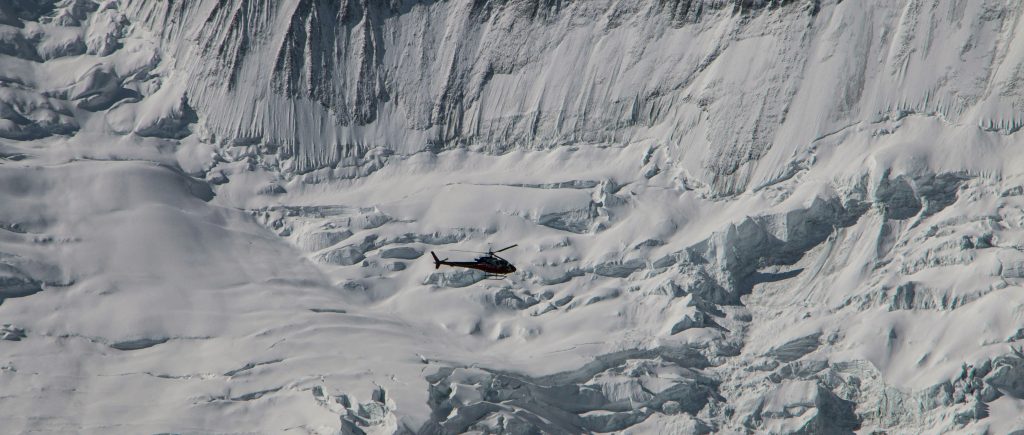
I’ll never forget that moment when our helicopter crested the ridge and Everest came into view. The morning sun glinted off its snow-capped peak, and for a brief, breathtaking instant, I felt like I was flying among gods. That’s the magic of experiencing Nepal from above – it transforms the already spectacular into something truly transcendent.
Did you know that helicopter tours in Nepal can take you to altitudes of over 18,000 feet? That’s higher than most commercial aircraft fly during cruising! And yet, there’s nothing quite like the intimate experience of soaring through the Himalayas in a helicopter, with nothing between you and the world’s most magnificent mountains but a sheet of plexiglass.
Why Helicopter Tours Are the Best Way to Experience Nepal’s Grandeur
Nepal has always been a trekker’s paradise, but let’s be honest – not everyone has two weeks to spend hiking to Everest Base Camp. And even for those who do, there are parts of this magnificent country that remain inaccessible by foot. That’s where helicopter tours come in!
Helicopter tours offer an unparalleled opportunity to witness Nepal’s diverse landscapes in a single day. From the bustling streets of Kathmandu to the serene lakes of Pokhara, from the lush valleys of the lowlands to the towering peaks of the Himalayas – all can be experienced in a matter of hours rather than days or weeks.
But it’s not just about convenience. There’s something uniquely exhilarating about hovering beside peaks that mountaineers spend months preparing to climb. The perspective you gain from a helicopter is simply impossible to replicate on the ground.
Popular Helicopter Tours in Nepal That Will Take Your Breath Away
Everest Base Camp Helicopter Tour
The crown jewel of Nepalese helicopter tours! This incredible journey typically departs from Kathmandu and takes you right to the foot of the world’s tallest mountain. Most tours include a stop at Lukla for refueling, followed by a breathtaking flight over the Khumbu Glacier and a landing at Kala Patthar (5,545m) or Everest Base Camp itself.
The highlight? A 5-10 minute stop for photographs with the panorama of Everest, Lhotse, Nuptse, and other iconic peaks as your backdrop. It’s simply unbeatable!
Duration: 4-5 hours Price range: $1,000-$1,200 per person (shared basis)
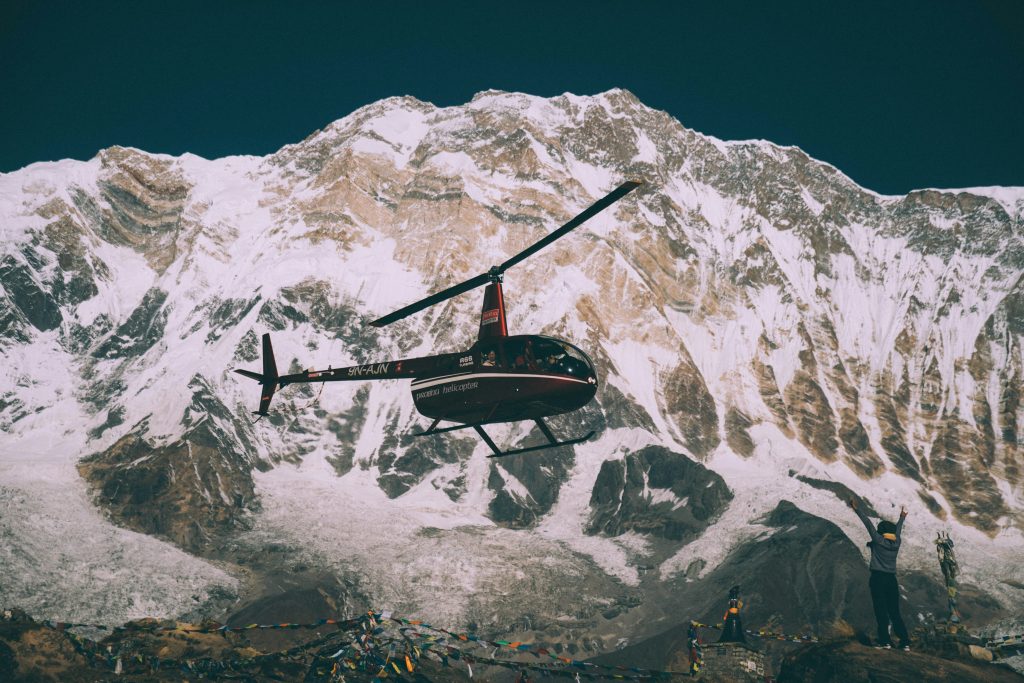
Annapurna Base Camp Helicopter Tour
The Annapurna range offers some of the most diverse scenery in Nepal, and this tour showcases it all! Taking off from Pokhara, you’ll soar over terraced fields and traditional villages before entering the sanctuary of towering peaks.
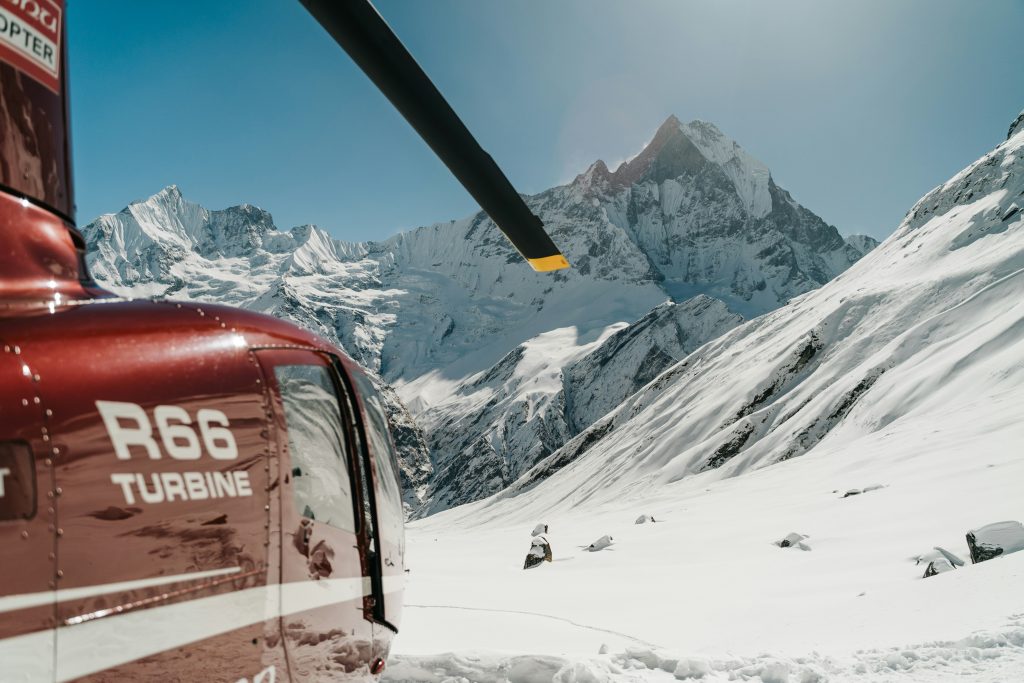
The helicopter lands at Annapurna Base Camp (4,130m), allowing you time to absorb the 360-degree mountain views. The sight of Annapurna I, Machapuchare (Fish Tail), and Hiunchuli rising above you is worth every penny!
Duration: 2-3 hours Price range: $800-$1,000 per person (shared basis)
Langtang Valley Helicopter Tour
One of Nepal’s best-kept secrets! The Langtang Valley tour offers incredible diversity – from subtropical forests to alpine meadows and glacial moraines. After the devastating 2015 earthquake, this region saw fewer trekkers, making it perfect for those seeking solitude amidst grandeur.
The tour typically includes a landing at Kyanjin Gompa (3,870m), where you can explore a traditional cheese factory and Buddhist monastery while surrounded by peaks exceeding 7,000m.
Duration: 3-4 hours Price range: $900-$1,100 per person (shared basis)
Gosaikunda Lake Helicopter Tour
Spirituality meets natural beauty in this tour to the sacred Gosaikunda Lake. Nestled at 4,380m, this alpine lake is revered by both Hindus and Buddhists. According to legend, Lord Shiva created the lake when he pierced the glacier with his trident to quench his thirst after swallowing poison.
The aerial approach to this turquoise jewel set among rugged mountains is nothing short of magical. Most tours allow time to circumambulate the lake – a powerful experience even for non-believers!
Duration: 2-3 hours Price range: $700-$900 per person (shared basis)
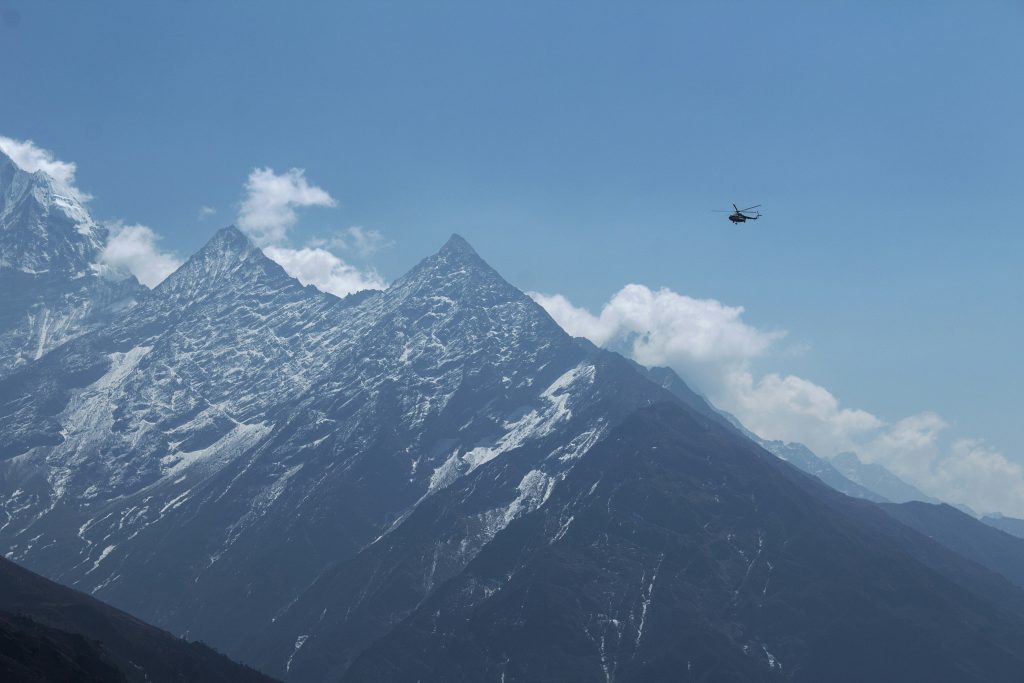
Best Time for Helicopter Tours in Nepal
Timing is everything when it comes to Himalayan adventures! Here’s my breakdown of when to plan your helicopter tour:
October-November (Peak Season)
This is prime time, folks! The monsoon has washed away the dust, leaving crystal-clear mountain views. The skies are typically blue, and visibility is at its best. The temperatures are moderate, making any landings at altitude comfortable.
Pro tip: Book months in advance for this period, as it’s when everyone wants to fly!
March-May (Second Peak Season)
Spring brings rhododendron blooms that carpet the hillsides in vibrant reds and pinks. The visibility might not match autumn standards due to pre-monsoon haze, but the explosion of color more than compensates. Plus, the temperatures are warming up, making high-altitude stops more comfortable.
December-February (Winter Season)
Don’t discount winter! While mornings can be bitterly cold at higher elevations, this season offers some advantages. The air is often clearer than in spring, and there are fewer tourists. Snow-covered landscapes add a magical dimension to the already spectacular scenery.
Warning: Flight cancellations are more common due to unpredictable mountain weather patterns.
June-September (Monsoon Season)
I’ll be honest – this isn’t ideal. Frequent rain and cloud cover can obscure mountain views and lead to flight cancellations. However, if you’re flexible with dates and willing to wait for weather windows, you might score significant discounts during this period.
What to Expect on Your Helicopter Tour
Pre-Flight Briefing
Safety first! Before takeoff, you’ll receive a comprehensive briefing covering emergency procedures, oxygen use (for high-altitude tours), and how to communicate with the pilot if needed. Pay close attention – the mountains demand respect!
The Experience
Most helicopters used for tourism in Nepal are modern aircraft with excellent visibility. The most common models are the Airbus AS350 B3e (known as the Squirrel) and the Bell 407GXP, both renowned for their high-altitude performance.
Seating is typically configured to maximize views, with headsets provided for communication. The flights themselves are surprisingly smooth, though there can be occasional turbulence around ridges and valleys.
High-Altitude Considerations
Many tours reach altitudes where oxygen levels are significantly lower. Most operators provide supplemental oxygen for landings above 3,500m to prevent altitude sickness. Even with oxygen, you might experience mild symptoms like lightheadedness or shortness of breath – totally normal and usually subsides quickly upon descent.
Preparing for Your Helicopter Adventure
What to Wear
Dress in layers! Even on warm days in Kathmandu, temperatures at landing sites can be below freezing. I recommend:
- Base layer: Moisture-wicking thermal top and bottom
- Mid layer: Fleece or down jacket
- Outer layer: Windproof and waterproof jacket
- Hat, gloves, and sunglasses (the glare at altitude is intense!)
- Sturdy footwear with good grip
What to Bring
Keep it light, but don’t forget:
- Camera with spare batteries (cold drains them quickly!)
- Small backpack for personal items
- Water bottle (stay hydrated to help with altitude)
- Sunscreen (UV radiation increases approximately 4% for every 1,000 feet of elevation)
- Personal medications
- Extra snacks (most tours provide some refreshments)
Photography Tips
As a photography enthusiast, I’ve learned a few tricks for helicopter shots:
- Use a polarizing filter to cut glare from snow and windows
- Wear dark clothing to minimize reflections in the windows
- Set your camera to a fast shutter speed (1/1000 or faster) to counter vibrations
- When possible, request a seat that will put your primary subjects on your side of the aircraft
Choosing the Right Helicopter Tour Company
With the surge in popularity of heli-tours, numerous companies now offer services in Nepal. How do you choose? Here are my criteria after numerous flights:
Safety Record
This is non-negotiable! Research companies thoroughly and check their safety histories. Reputable operators like Simrik Air, Air Dynasty, and Fishtail Air maintain high safety standards and employ experienced pilots familiar with mountain flying conditions.
Experience Level of Pilots
Mountain flying requires specialized skills. The best companies employ pilots with thousands of hours of mountain flight experience. Don’t hesitate to ask about your pilot’s qualifications!
Aircraft Maintenance
Well-maintained helicopters are crucial for safety. Look for companies that are transparent about their maintenance protocols and use newer aircraft models designed for high-altitude operations.
Environmental Considerations
The most responsible operators minimize their environmental impact by:
- Flying routes that avoid sensitive wildlife areas
- Limiting noise pollution near villages and monasteries
- Supporting conservation initiatives in the regions they serve
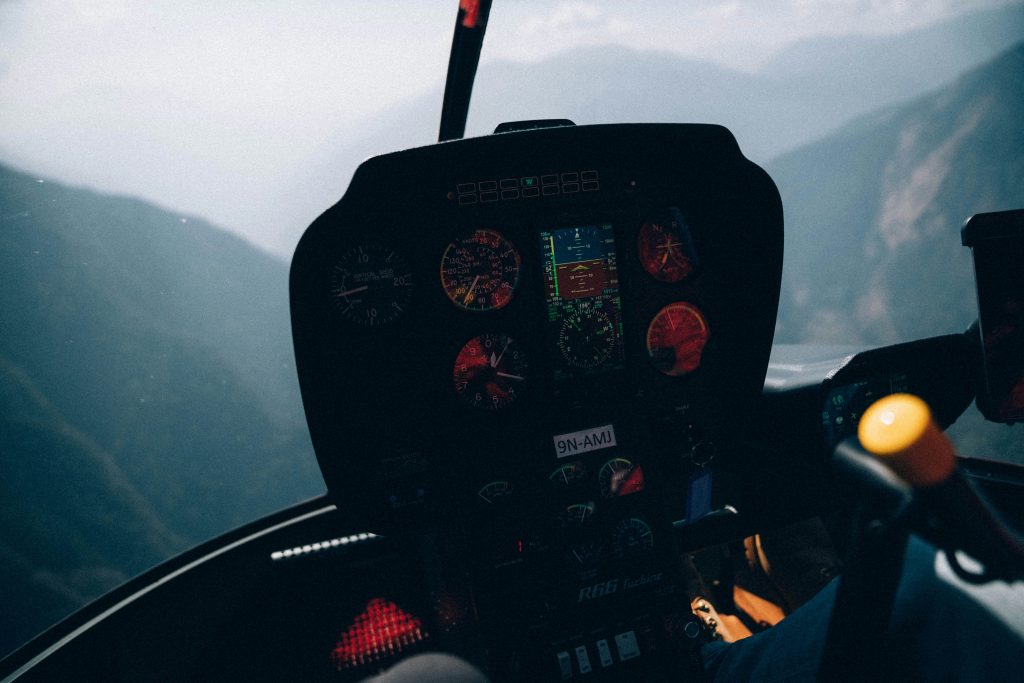
Beyond Sightseeing: Specialized Helicopter Experiences
Heli-Skiing Adventures
For adrenaline junkies, Nepal is emerging as an exciting heli-skiing destination. Being dropped on pristine Himalayan slopes with runs of up to 2,000 vertical meters is the ultimate skiing experience!
Photography-Focused Tours
Many companies now offer specialized photography flights with doors-off options (weather permitting) and routes timed for optimal lighting conditions. These tours often include an experienced photography guide to help you capture the best shots.
Luxury Mountain Picnics
Imagine dining with Everest as your backdrop! Premium operators offer gourmet picnic experiences at breathtaking locations normally accessible only to experienced trekkers.
The Impact of Helicopter Tourism in Nepal
As amazing as helicopter tours are, it’s important to consider their impacts:
Economic Benefits
Helicopter tourism creates jobs and brings revenue to remote areas. Many companies hire local staff and contribute to community projects, supporting livelihoods beyond the typical trekking routes.
Environmental Considerations
Let’s be frank – helicopters have a carbon footprint. However, they can actually reduce overall impact in some ways by eliminating the need for extensive ground infrastructure in fragile ecosystems. The best operators follow strict environmental guidelines and contribute to conservation efforts.
Cultural Impacts
Helicopter access to previously isolated communities brings both opportunities and challenges. While economic benefits can be substantial, sudden exposure to outside influences can affect traditional ways of life. Responsible operators work closely with local communities to ensure tourism develops sustainably.
Making Memories That Last a Lifetime
There’s something profoundly moving about seeing the Himalayas from above. These mountains have shaped civilizations, inspired spiritual quests, and challenged human endurance for centuries. Experiencing them from a helicopter offers a unique perspective that few will ever know.
I’ve trekked to Everest Base Camp twice, but my most vivid memory of the Himalayas remains that first helicopter flight when Everest suddenly appeared before me in all its imposing glory. It’s a perspective that changes how you see not just the mountains, but your place in the world.
Whether you’re short on time, physically unable to trek, or simply want to experience these magnificent mountains in a different way, a helicopter tour in Nepal will deliver moments of wonder that stay with you long after you’ve returned home.
So strap in, lift off, and prepare for an adventure that will quite literally take your breath away. The roof of the world awaits – and there’s no more spectacular way to see it than from the sky!