
Discovering Nepal’s Major Festivals: A Cultural Journey Like No Other
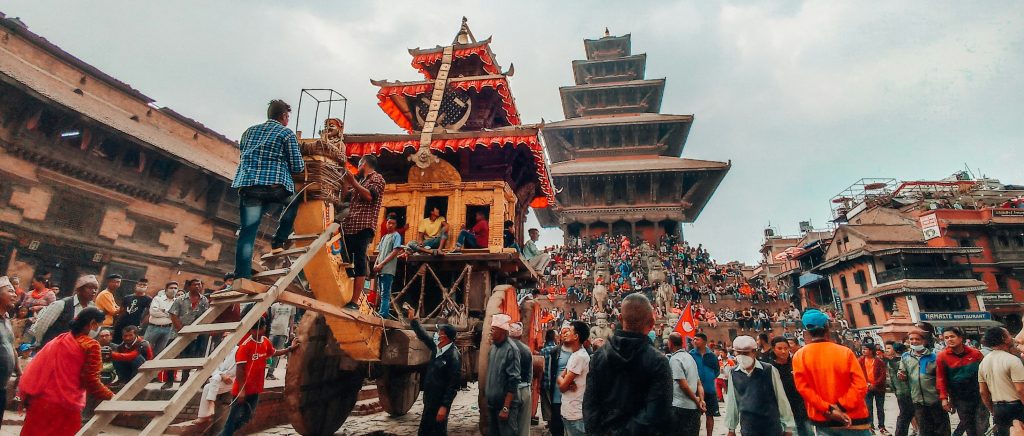
I remember my first encounter with Dashain in Kathmandu—the city transformed before my eyes! Colorful kites dotted the sky, bamboo swings (ping) appeared in village squares, and families reunited in celebration. That moment changed my understanding of what festivals could be. Nepal’s celebrations aren’t just events; they’re living expressions of centuries-old traditions that continue to thrive in this beautiful Himalayan nation.
Nepal’s festivals offer travelers and culture enthusiasts an authentic window into the country’s rich heritage. With over 60 ethnic groups celebrating more than 50 major festivals annually, Nepal truly lives up to its reputation as a cultural treasure trove. Whether you’re planning a visit or simply curious about global traditions, understanding these celebrations provides invaluable insight into Nepali society.
Let’s explore the vibrant tapestry of Nepal’s major festivals, from the nationwide celebrations that halt daily life to the unique local traditions that showcase the country’s incredible diversity.
Dashain: Nepal’s Greatest Celebration
Dashain stands as Nepal’s most significant festival, transforming the country for 15 magical days each autumn. As Nepal’s longest and most auspicious festival, it celebrates the victory of good over evil, commemorating goddess Durga’s triumph against the demon Mahishasura.
What Makes Dashain Special
During Dashain, Nepal experiences a nationwide reunion as people travel from far and wide to celebrate with family. The atmosphere is electric! Government offices, schools, and many businesses close for at least a week, creating a festive mood throughout the country.
Key Dashain traditions include:
- Flying kites – Symbolizing messages to the gods for no more rain
- Building bamboo swings (ping) – A traditional activity in village squares
- Playing cards – A common social activity during the festival
- Animal sacrifices – Though controversial and declining in urban areas
- Tika ceremonies – Where elders place red vermilion powder on younger family members’ foreheads as a blessing
For travelers, Dashain offers an unparalleled cultural experience, though be prepared for transportation challenges as locals travel home for celebrations.
Tihar: The Festival of Lights
Following closely after Dashain, Tihar (also known as Deepawali) illuminates Nepal for five days. Unlike its Indian counterpart, Nepal’s festival has unique elements that make it distinctly Nepali. What I love most about Tihar is how each day honors different relationships – not just between humans but extending to animals and nature!
The Five Days of Tihar
Each day of Tihar celebrates different entities:
- Kaag Tihar – Honoring crows as messengers of Yama (god of death)
- Kukur Tihar – Celebrating dogs for their loyalty and guardianship
- Gai Tihar & Laxmi Puja – Worshipping cows and the goddess of wealth
- Govardhan Puja – Honoring oxen and the mountain that Lord Krishna lifted
- Bhai Tika – Celebrating the brother-sister bond
During Tihar, homes and streets sparkle with oil lamps and candles, creating a magical atmosphere. Rangoli patterns (colorful floor designs) decorate entrances, and the sounds of Deusi-Bhailo (traditional songs) fill neighborhoods as children and young adults go door-to-door performing for treats and donations.
Holi: The Festival of Colors
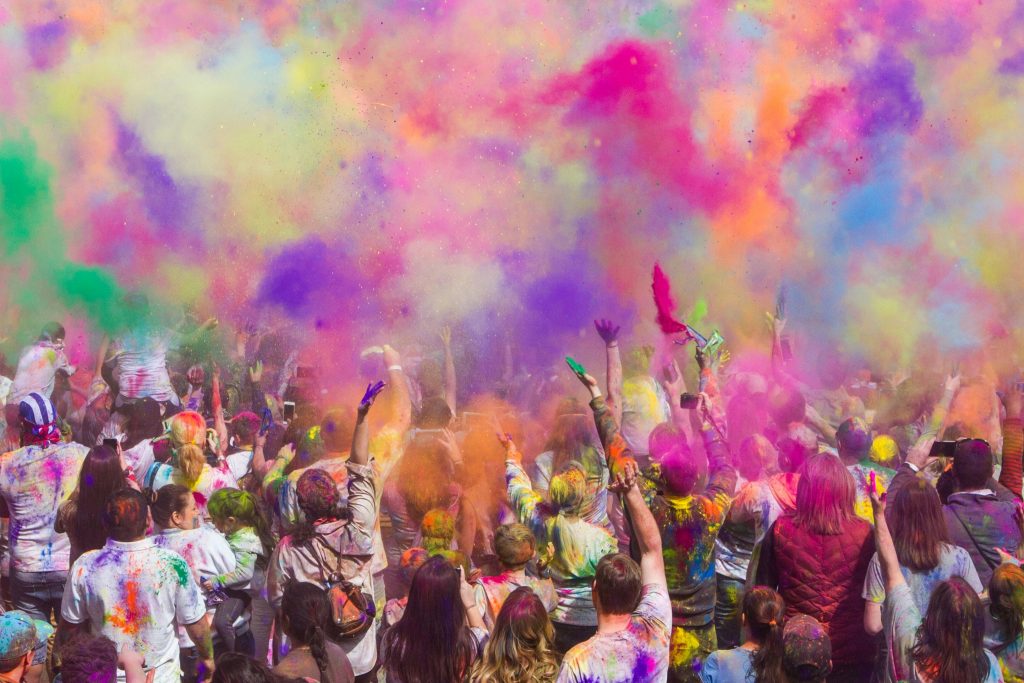
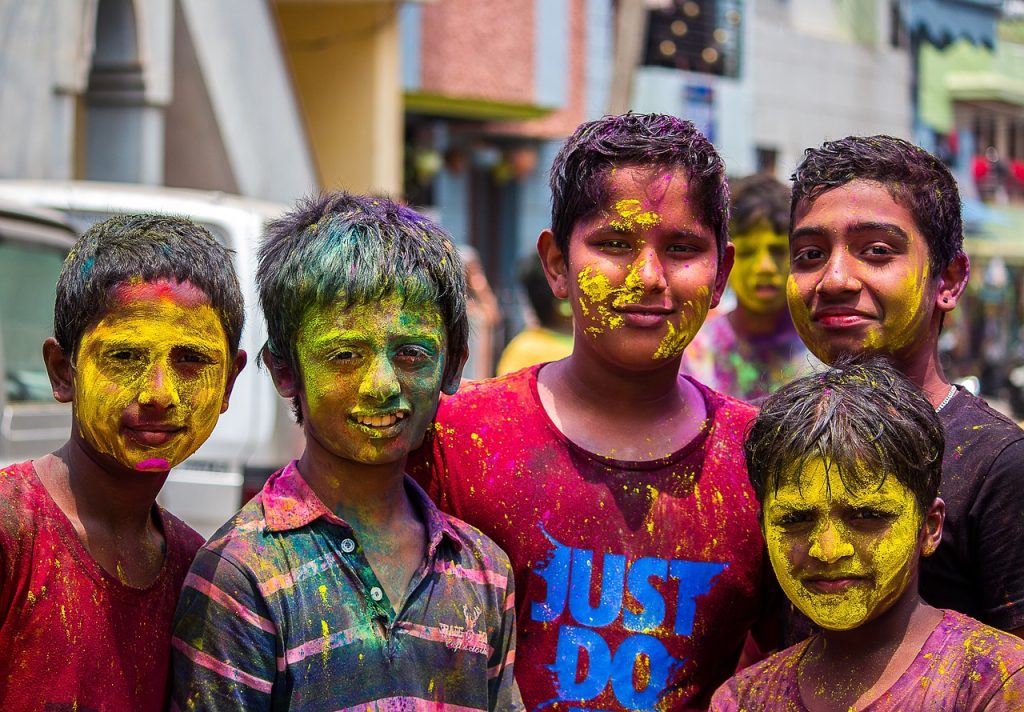
When spring arrives in Nepal, it brings with it one of the most photogenic festivals in the world – Holi! I’ve never experienced such joyful chaos as being in Kathmandu during this celebration. Imagine walking down the street and suddenly being doused with colored powders and water from all directions!
Holi celebrates the victory of Hindu god Vishnu over the demoness Holika and marks the end of winter. The festival creates an atmosphere where normal social boundaries temporarily dissolve – people of all castes, ages, and backgrounds come together in colorful celebration.
Experiencing Holi in Nepal
In Nepal, Holi celebrations vary by region:
- The festival begins one day earlier in the Terai region compared to the hill areas
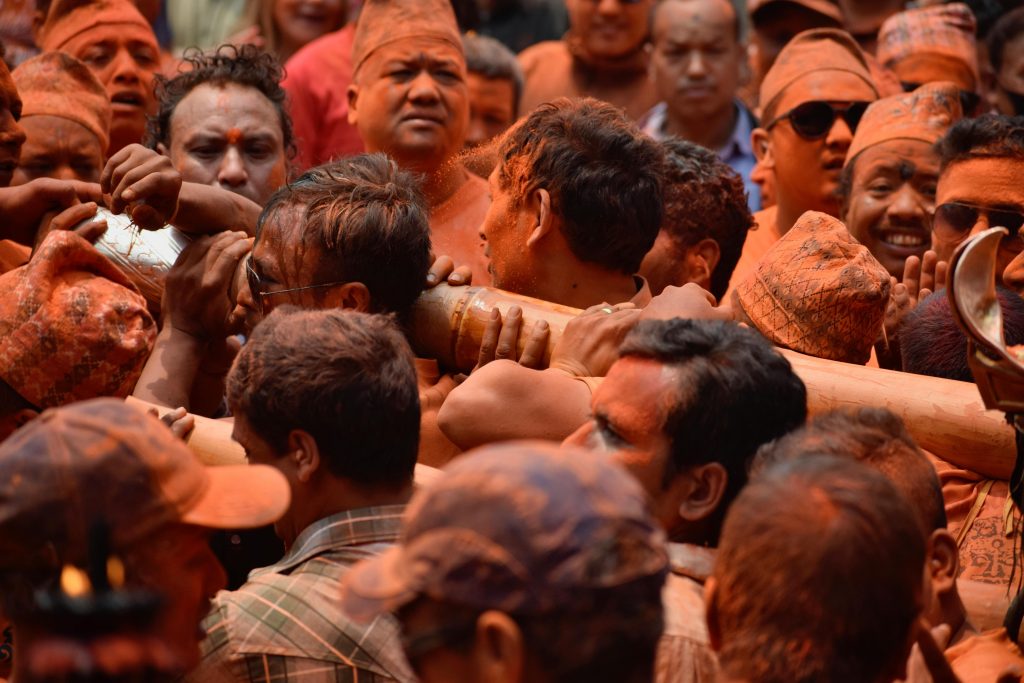
- In Kathmandu’s Durbar Square, the erection of the Chir (a wooden pole decorated with colorful strips of cloth) signals the start of festivities
- The pole’s falling on the final day marks the end of Holi
For visitors, Holi offers incredible photo opportunities and cultural experiences, but be prepared to get colorful! Wear clothes you don’t mind being permanently dyed, protect your camera equipment, and consider applying oil to your skin and hair to make powder removal easier.
Indra Jatra: Kathmandu’s Living Heritage
Indra Jatra may be less known internationally than other Nepali festivals, but it represents one of Kathmandu’s most spectacular cultural events. This eight-day celebration honors Indra, the god of rain, but has evolved to incorporate multiple traditions, including the worship of the Living Goddess Kumari.
What makes Indra Jatra truly special is the rare public appearance of the Kumari – a young girl believed to be the incarnation of the goddess Taleju. Carried in a palanquin through Kathmandu’s ancient streets, the Kumari blesses onlookers during elaborate processions.
The festival features:
- The display of Akash Bhairav’s massive mask, which secretes homemade liquor considered blessed
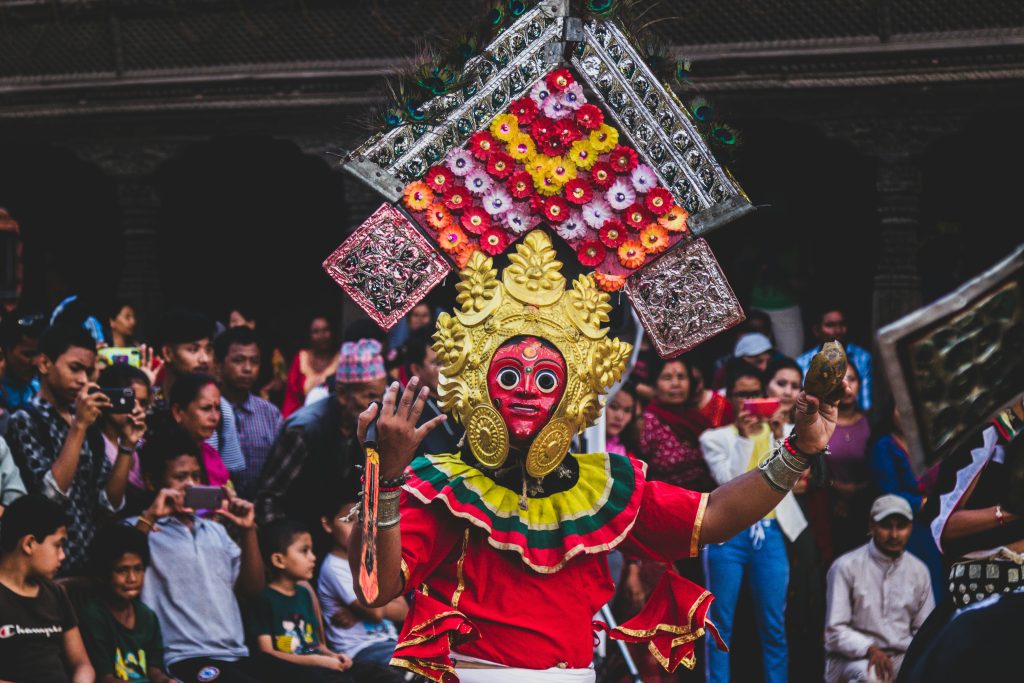
- Traditional masked dances representing various deities
- The pulling of Indra’s chariot through Kathmandu’s historic districts
- Lakhe dances performed by men in demon masks
For cultural enthusiasts, timing a visit to coincide with Indra Jatra provides an unparalleled glimpse into Nepal’s living traditions.
Mani Rimdu: Mystical Buddhist Celebrations
While many of Nepal’s major festivals have Hindu origins, the country’s significant Buddhist population maintains equally impressive traditions. Mani Rimdu exemplifies Tibetan Buddhist celebrations in the Everest region, combining religious ceremonies with colorful performances.
This three-day festival at Tengboche Monastery brings together spiritual practices and community celebration. Monks perform sacred dances in vibrant costumes and masks, enacting stories from Buddhist teachings. The creation and destruction of an intricate sand mandala symbolizes the impermanence central to Buddhist philosophy.
For trekkers heading to Everest Base Camp, timing your journey to witness Mani Rimdu adds spiritual depth to your Himalayan adventure.
Losar: Tibetan New Year
In Nepal’s mountainous northern regions, Losar (Tibetan New Year) brings communities together for one of the most important celebrations in the Tibetan Buddhist calendar. The timing varies annually according to the Tibetan lunar calendar, typically falling in February or March.
Losar combines solemn religious ceremonies with joyful community gatherings. Families thoroughly clean their homes to represent a fresh start, prepare special foods like guthuk (dumpling soup) and khapse (fried pastries), and visit monasteries for blessings.
In Kathmandu’s Tibetan communities, particularly Boudhanath, visitors can witness colorful processions, traditional dances, and the hanging of new prayer flags to carry blessings with the wind.
Teej: Women’s Festival of Fasting and Feasting
Teej provides a fascinating window into Nepali women’s traditions and gender roles within Hindu society. This women-centric festival combines religious devotion with female solidarity as women fast for the well-being of their husbands (or future husbands) and pray to Lord Shiva.
What strikes me about Teej is the beautiful contradiction it represents—women adhering to traditional gender roles while simultaneously creating spaces for female expression and solidarity! The festival features three distinct days:
- Dar Khane Din – A day of feasting together before the fast
- Upas – The fasting day with visits to Shiva temples
- Rishi Panchami – Purification rituals and honoring the seven sages
The vibrant red saris, singing, dancing, and processions create a visually stunning celebration. For female travelers especially, witnessing or participating in Teej festivities offers unique insights into Nepali women’s experiences.
Buddha Jayanti: Celebrating the Buddha’s Birth
Few people realize that Nepal is the birthplace of Siddhartha Gautama, who became the Buddha. Buddha Jayanti celebrates his birth, enlightenment, and death—all believed to have occurred on the same day of the year. The full moon day of Vaisakha (April-May) transforms Buddhist sites like Lumbini (Buddha’s birthplace), Boudhanath, and Swayambhunath into centers of devotion.
During Buddha Jayanti, devotees circumambulate stupas, offer prayers, light butter lamps, and release captive birds to symbolize freedom from suffering. Monasteries organize special ceremonies, and many Nepalis abstain from meat and alcohol as a sign of respect.
For spiritual travelers, Buddha Jayanti provides an opportunity to witness Buddhism practiced in its birthplace—a profound experience regardless of one’s personal beliefs.
Planning Your Visit Around Nepal’s Festivals
If experiencing Nepal’s cultural celebrations is high on your priority list, consider timing your visit around these major festivals. However, keep in mind that transportation becomes challenging during major celebrations as locals return to their ancestral villages. Accommodation prices may also increase in tourist areas during festival seasons.
The most festival-rich periods in Nepal occur during:
- September-November: Dashain, Tihar, and numerous smaller celebrations
- February-March: Losar and Holi
- April-May: Buddha Jayanti
For the most authentic experience, consider connecting with local organizations that help travelers respectfully participate in festivities. Many Nepali families welcome respectful visitors to observe or join their celebrations.
The Heart of Nepal’s Cultural Identity
Nepal’s festivals aren’t merely events on a calendar—they’re living expressions of the country’s soul. Through these celebrations, Nepalis maintain connections with ancient traditions while adapting to the modern world. As a visitor, witnessing these festivals offers more than spectacular photographs; it provides genuine insight into what makes Nepal truly unique.
Have you experienced any of Nepal’s incredible festivals? Or are you planning a trip to coincide with one? Whatever brings you to explore these celebrations, prepare to be transformed by the color, devotion, and joy that characterize Nepal’s festival heritage!